
Welcome to the Mexico interactive module, a core part of The Atlas Project.
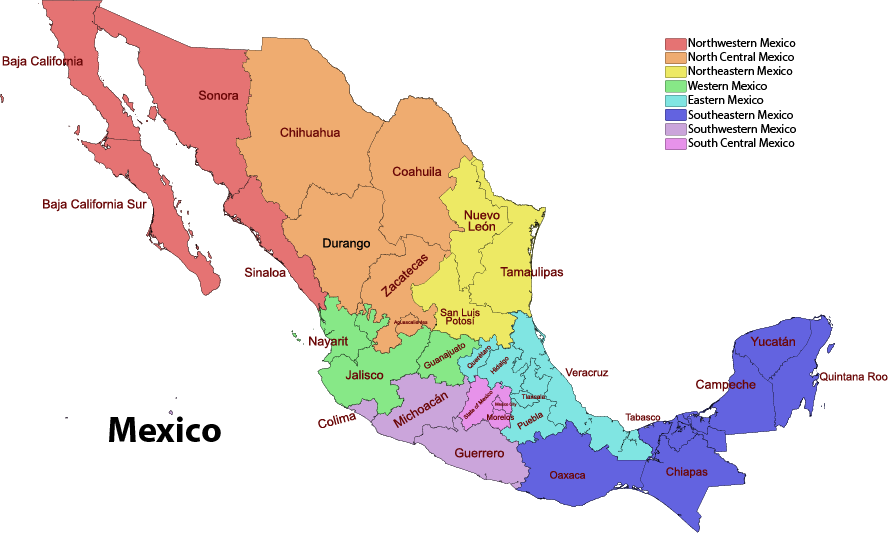
This section provides a detailed geopolitical breakdown through our curated data tables. Therefore, we invite you to analyze the historical and territorial layers that define this region. Furthermore, these figures offer a deeper understanding of how geography has shaped the current identity of Mexico.
La Patria es Primero
"The Motherland is Foremost"
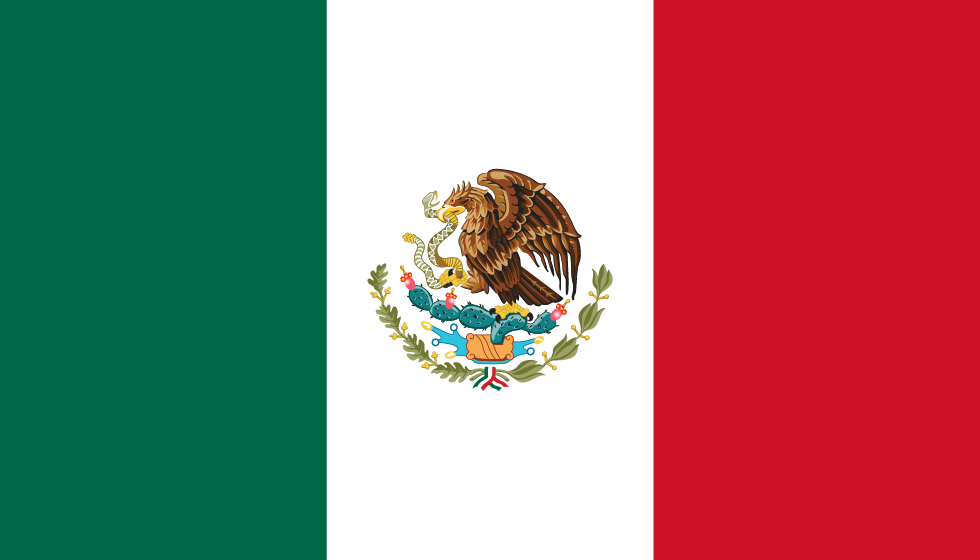
“Mexico is the third-largest country in North America by land area. It is situated between the Pacific Ocean to the west and the Gulf of Mexico and Caribbean Sea to the east, sharing its northern border with the United States and its southern borders with Guatemala and Belize.”
Category
Information
Name
Estados Unidos Mexicanos
Meaning
The name comes from the Nahuatl Mēxihco, which means “In the navel of the Moon” (referring to the lake system where Tenochtitlan was built).
Population
129 million. (approx.)
Capital
Mexico City
Largest city
Mexico City (CDMX)
Borders
North: United States (
South: Guatemala and Belize
East: Gulf of Mexico and Caribbean Sea.
West: Pacific Ocean.
Motto
La Patria es Primero (The Homeland Comes First)
Official Languages
Spanish and 68 indigenous languages (legally, there is no single official language, they are all considered “national languages”).
Currency
Mexican Peso (MXN)
Government type
Federal Presidential Representative Republic.
Indigenous people
More than 60 groups, including the Nahua, Maya, Zapotec, Mixtec, and Otomi.
Religion
Predominantly Roman Catholic (approx. 78% of the population)
Historical Eras of Mexico
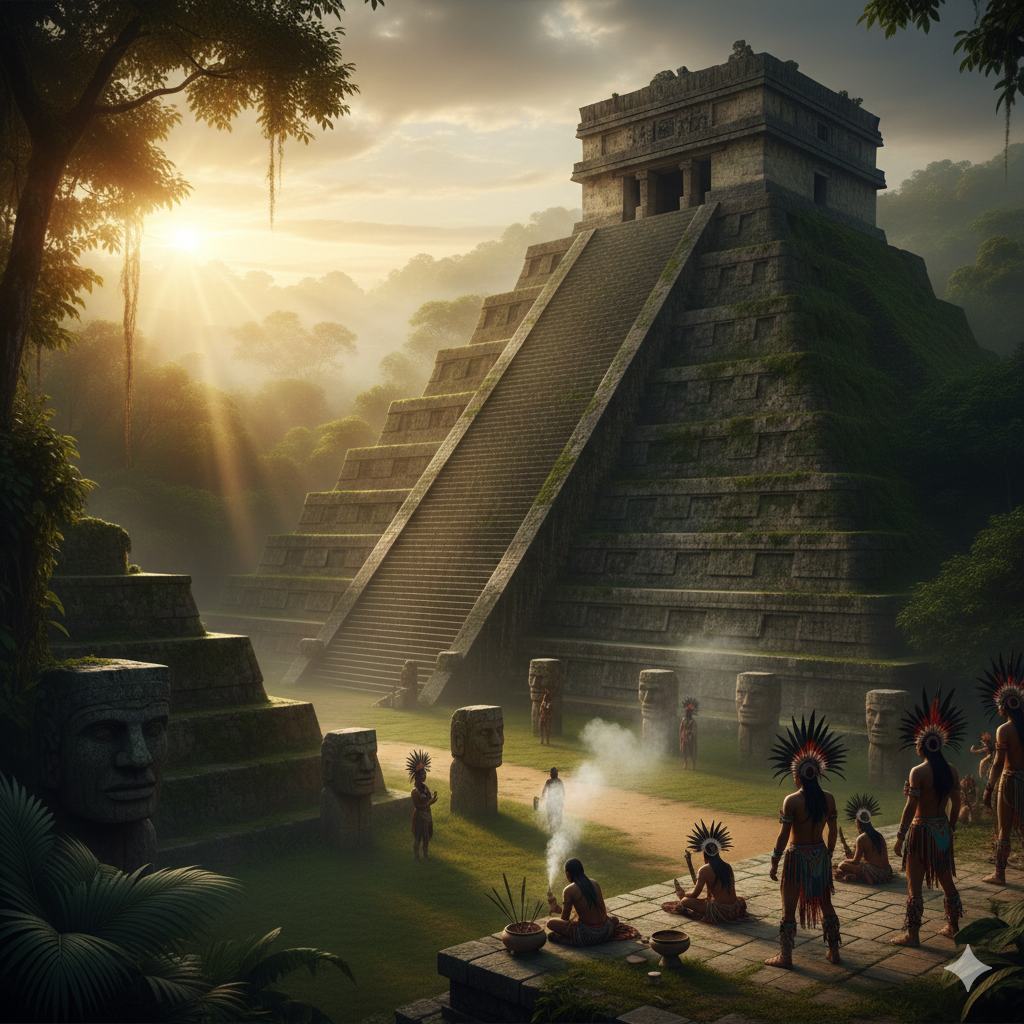
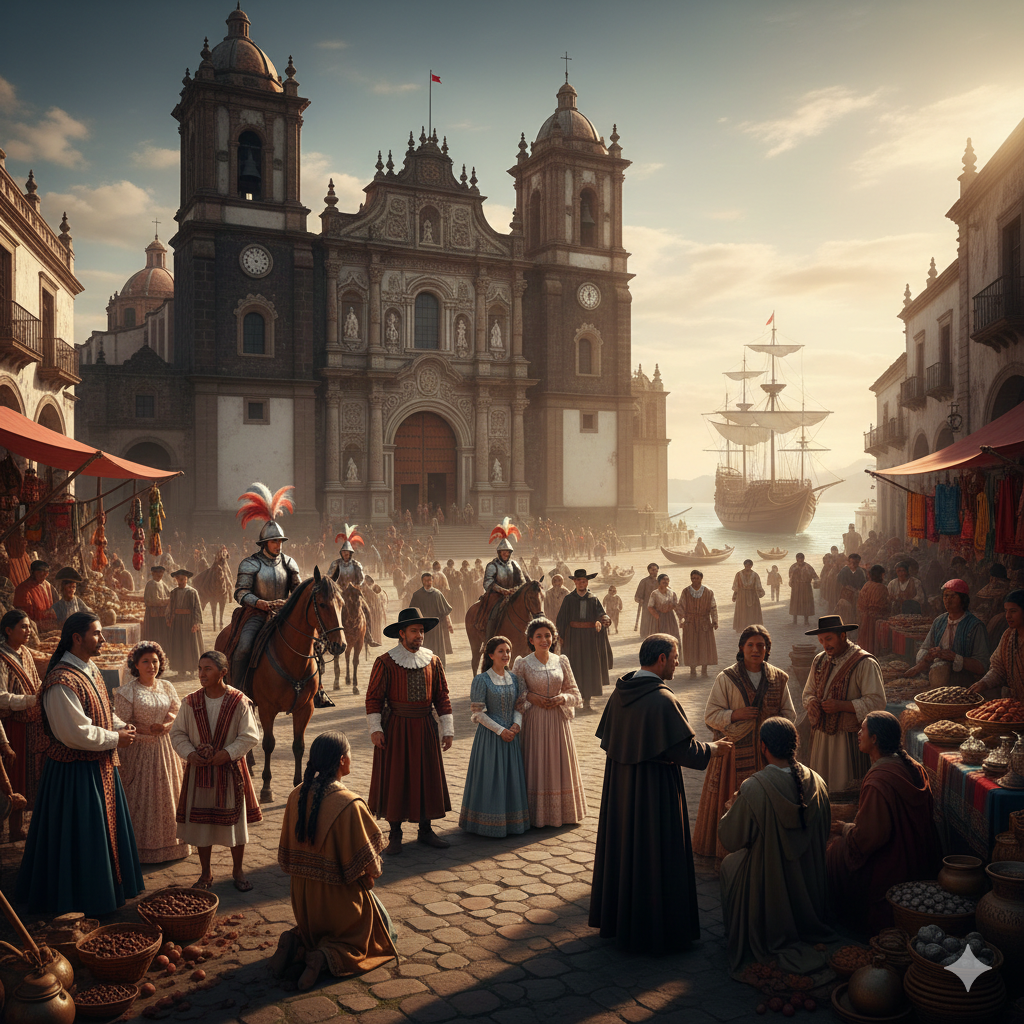
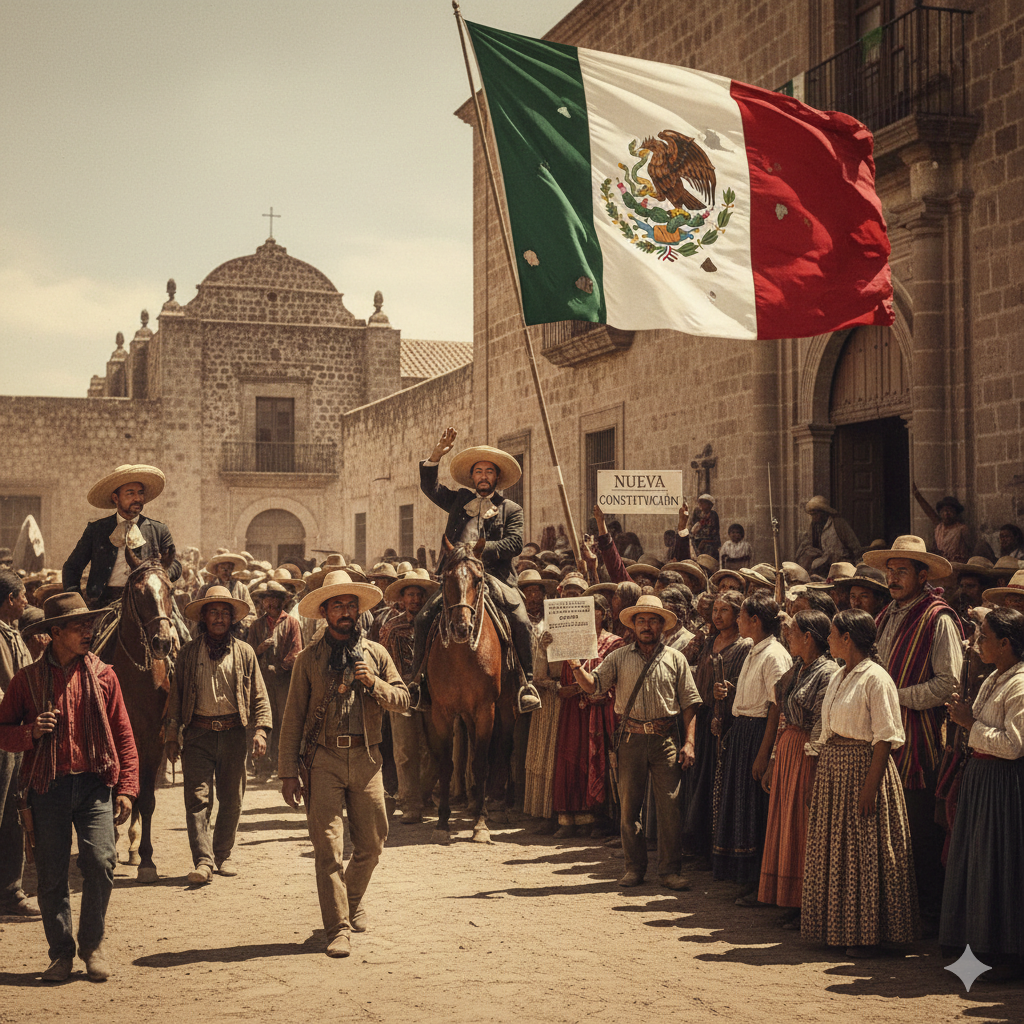
Mexico’s history is a vibrant mosaic born from the grandeur of ancient civilizations, the profound impact of Spanish encounter, and a resilient spirit that forged a modern, pluralistic nation. From the monumental legacy of the Aztecs and Mayans to the revolutionary ideals of the 20th century, each era has left an indelible mark on the identity of the Land of the Sun.
Explore the pivotal milestones that transformed this territory into a cultural powerhouse, where ancestral traditions and contemporary vision converge in a celebration of human diversity.
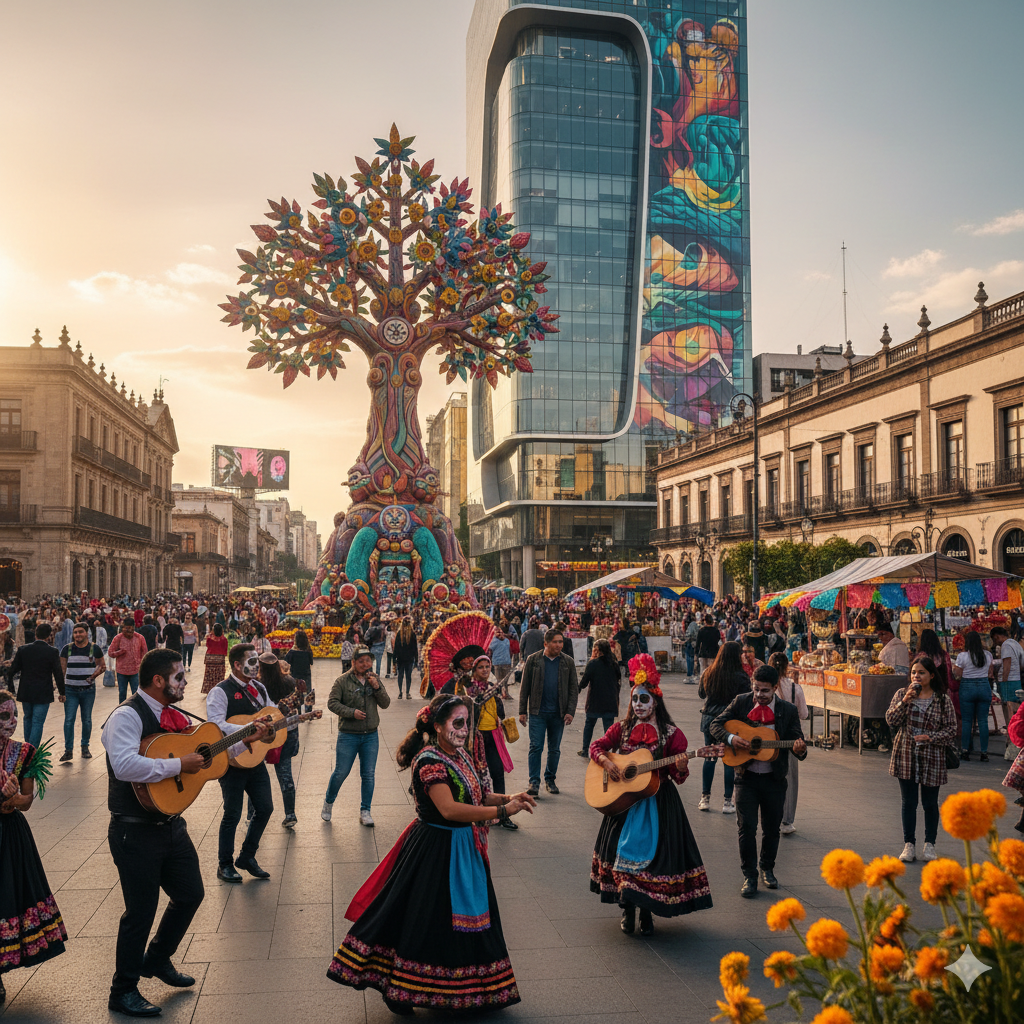
The Heart of Mexico
Immerse yourself in the vibrant cultural tapestry of the Navel of the Moon. Explore the world-renowned flavors, ancestral artistic expressions, and the deep-rooted traditions that pulse through the heart of Mexico, from its ancient valleys to its turquoise shores.
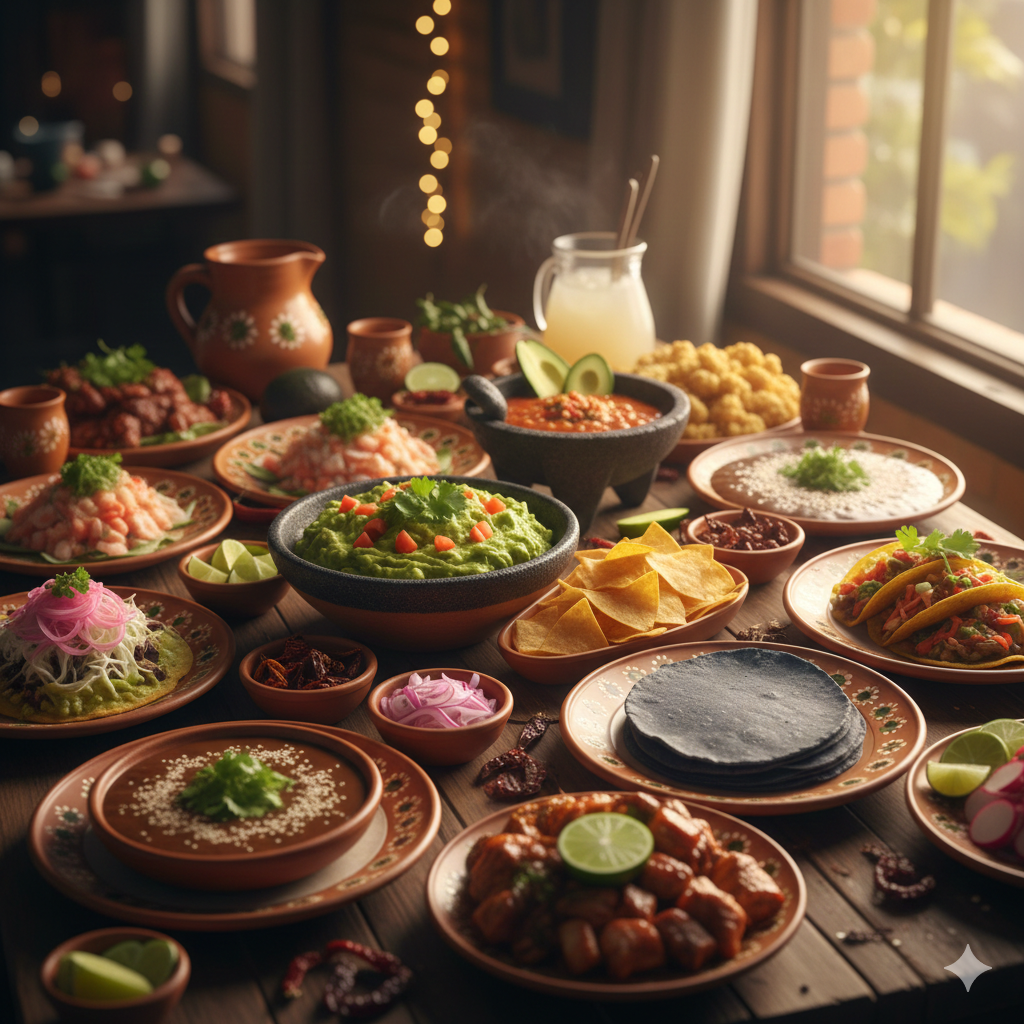
Mexican Gastronomy
Mexican cuisine is much more than food; it is a cultural treasure recognized as a UNESCO Intangible Cultural Heritage of Humanity. Built upon a foundation of corn, beans, and chili, it is a masterclass in complexity where ancient Mesoamerican techniques meet European influences. From the deep, chocolatey notes of Mole Poblano to the fresh vibrancy of street tacos, every dish tells a story of identity, community, and a thousand-year-old devotion to the land.
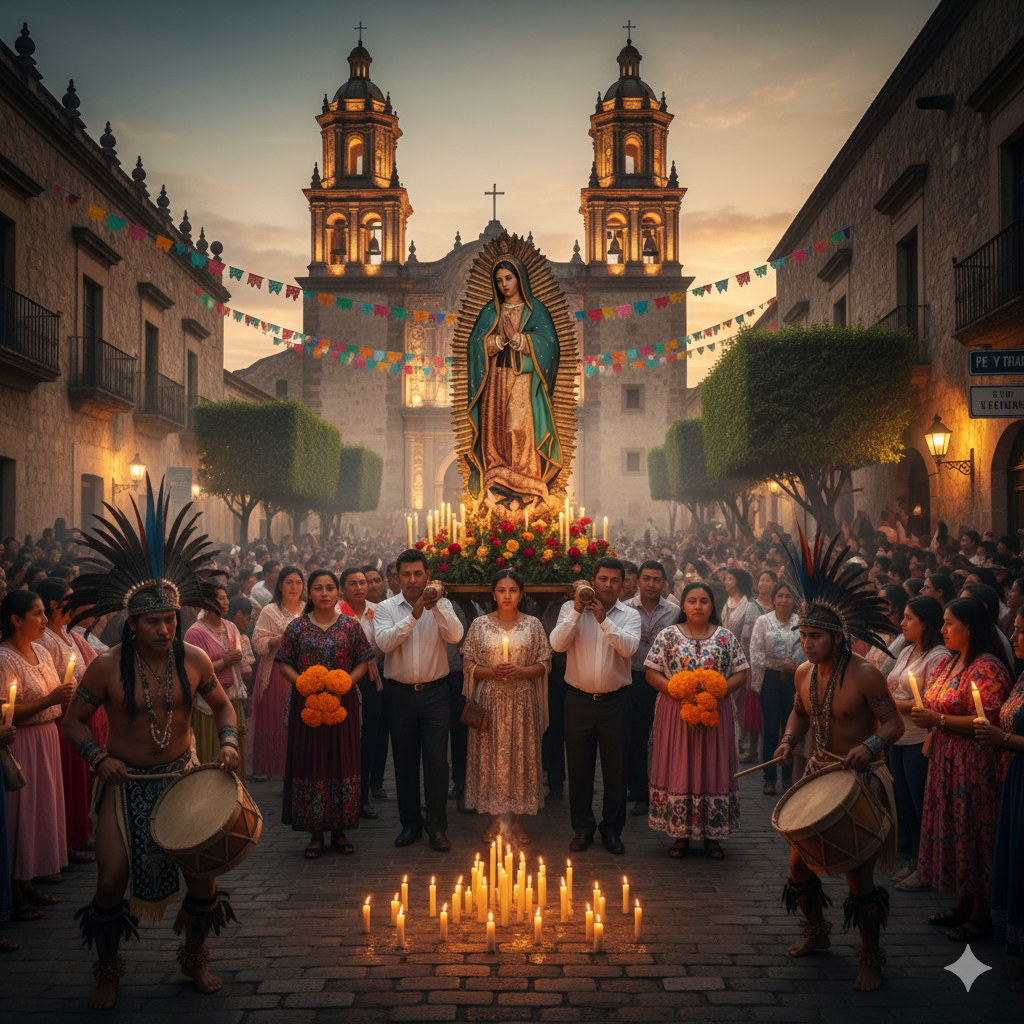
Religion
Spirituality in the “Navel of the Moon” is a profound tapestry of faith where ancient Mesoamerican roots and colonial traditions intertwine. This unique syncretism is best embodied by the Virgin of Guadalupe, a powerful symbol that bridges Indigenous identity with the Catholic faith, drawing millions to her Basilica in a display of devotion unlike any other in the world.
Beyond formal religion, Mexico celebrates a mystical relationship with the beyond. The world-famous Day of the Dead (Día de Muertos) is not a time of mourning, but a vibrant homecoming where the living and the deceased reunite through altars, marigolds, and shared memories. From Baroque cathedrals to remote mountain rituals, faith in Mexico is a living, breathing celebration of the continuity of life.
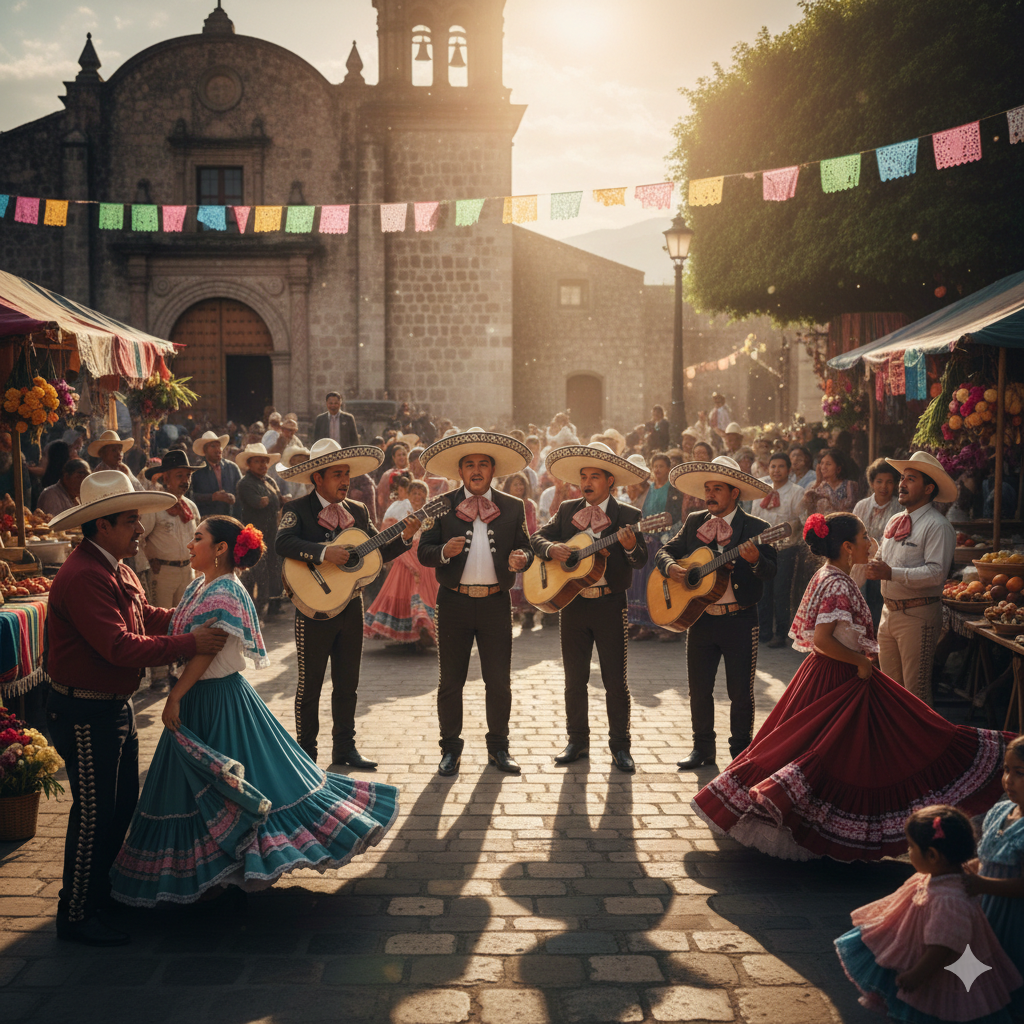
Canadian Music
Mexican music is a powerful symphony of resistance, celebration, and deep emotion. It is a world where the triumphant trumpets of Mariachi—another UNESCO Heritage—coexist with the poetic storytelling of Corridos and the rhythmic soul of Son Jarocho.
From the romantic melodies of the golden age of cinema to the modern beats pulsing through global charts, Mexico’s soundscape is defined by the Grito—a visceral expression of joy and sorrow. Whether it is a grand orchestra or a lone guitar in a village square, music is the thread that binds the diverse people of the “Navel of the Moon” together in one single, resonant heartbeat.
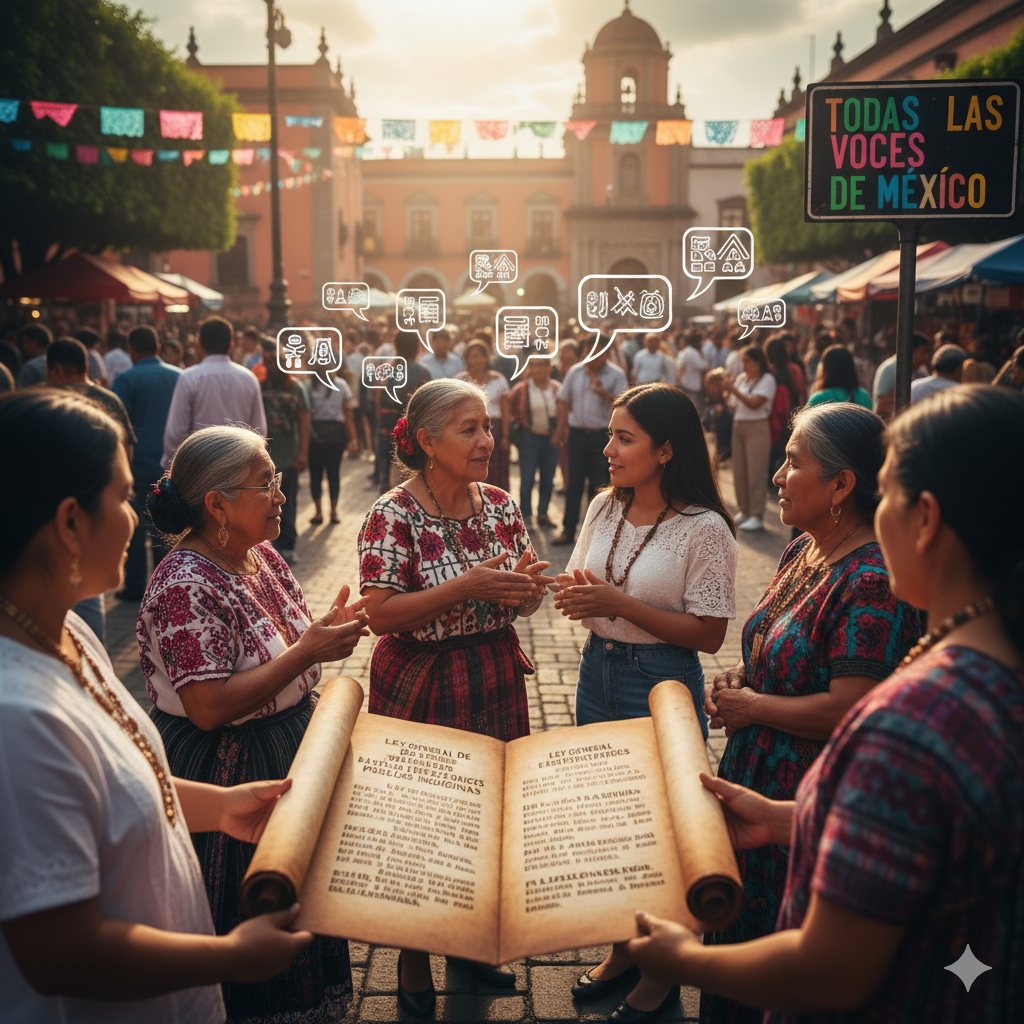
Languages
Mexico is one of the most linguistically diverse nations on Earth—a living library of human thought. While Spanish is the most widely spoken, it is enriched by 68 national indigenous languages and hundreds of dialects that have survived for millennia.
From the poetic depth of Nahuatl (the language of the Aztecs that gave us the name Mexico) to the rhythmic complexity of Mayan and the tonal beauty of Zapotec, these are not just ways of speaking, but unique ways of seeing the world. To protect these voices is to protect the very soul of the “Navel of the Moon,” ensuring that the ancestral wisdom of the clouds, the jungles, and the valleys continues to resonate in the modern world.
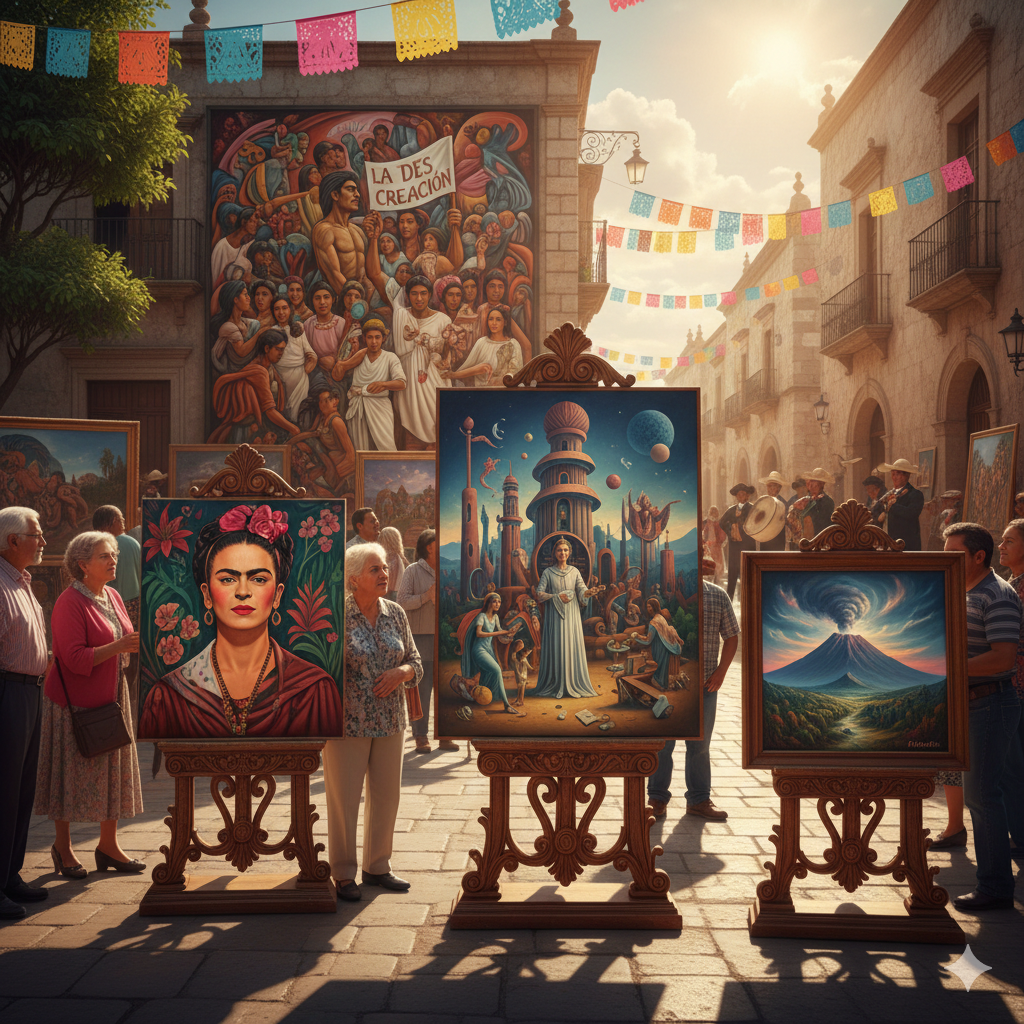
Canadian Art
Mexico’s art is a bold dialogue between the monumental and the intimate. It is a land where the Muralist Movement—led by giants like Diego Rivera—transformed public walls into historical epics of social justice, while the visionary Dr. Atl captured the raw, volcanic soul of the landscape.
In contrast to the grand scale, the “Navel of the Moon” also birthed profound introspection. The haunting self-portraits of Frida Kahlo explored the intersection of pain and identity, while the mystical, dreamlike canvases of Remedios Varo brought European surrealism to a magical Mexican reality. From ancient stone carvings to avant-garde masterpieces, Mexican art remains a powerful mirror of the human condition and a colorful defiance of the ordinary.

Join the expedition
Subscribe to our Newsletter
About the project
“The Atlas Project is a visual and sensory encyclopedia designed for the modern explorer.
Our mission is to go beyond conventional maps, tracing the essence of humanity through the profound connection between territory, time, and culture.
We invite you to discover the footprints that define us.”